
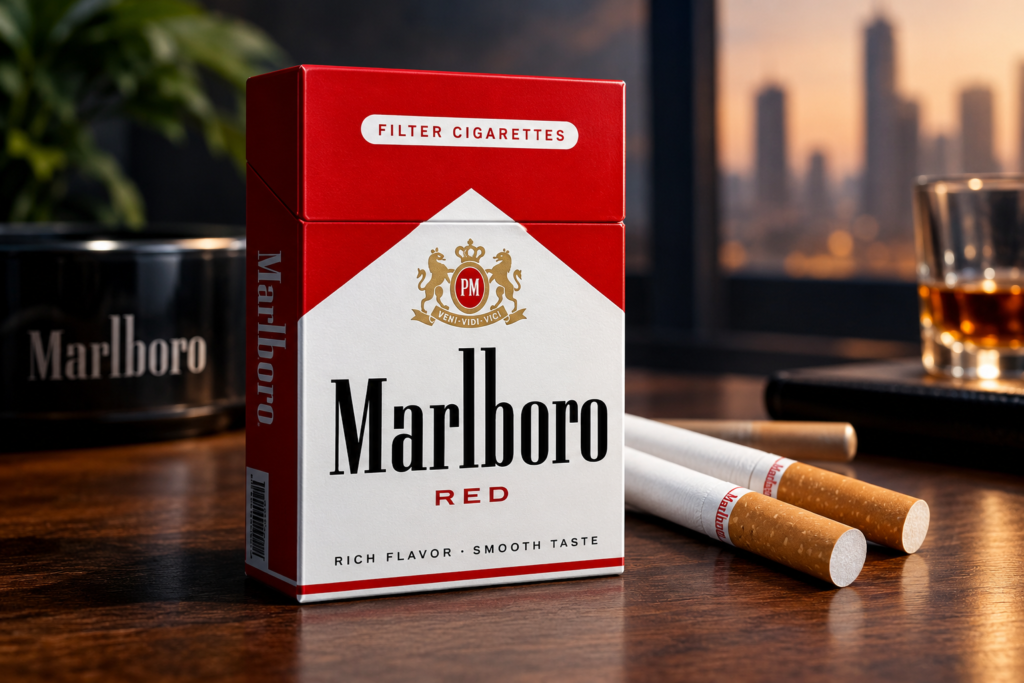
Marlboro Red is one of the most recognized cigarette brands on the planet. Its red-and-white pack is sold in more than a hundred countries, and the brand has shaped tobacco marketing for decades. Whether you are researching the product for the first time, comparing it with other brands, or trying to understand its health impact, this guide covers the essentials: what it is, how strong it is, why prices differ so much, and what the science says about smoking. The information here is general and educational, and it varies by country and regulation.
What Is It? Background and Basics
A Short History
The Marlboro name dates back to the 1920s, when it was first marketed as a mild cigarette for women. In the 1950s the brand was repositioned with a bold new image, the rugged “Marlboro Man” advertising campaign, and the full-flavor red pack became the face of the brand. That campaign is still studied in marketing courses as one of the most successful brand makeovers in history.
Who Makes It
Ownership depends on where you live. In the United States, the brand is made and sold by Philip Morris USA, a subsidiary of Altria. In most other countries, it is produced by Philip Morris International. Because different companies and regional regulations are involved, the exact blend, packaging, and warning labels can differ from one market to another.
Marlboro Red Strength: Tar, Nicotine, and Taste
Tar and Nicotine Levels
The red pack is the “full flavor” variant in the Marlboro family, which means it is stronger than the Gold (lights) or Silver versions. Exact tar and nicotine figures depend on the market. In the European Union, for example, regulations cap cigarettes at 10 mg of tar, 1 mg of nicotine, and 10 mg of carbon monoxide per cigarette as measured by laboratory machines. Other countries use different limits or testing methods.
It is important to know that these machine-measured numbers do not reflect how much a real person absorbs. Smokers often inhale more deeply, take more puffs, or smoke more cigarettes to reach their desired nicotine level, so a lower number on the pack does not mean a safer cigarette.
Flavor and Smoking Experience
Smokers typically describe this cigarette as robust, with a dry, slightly peppery taste from its Virginia and Burley tobacco blend. It tends to deliver a stronger throat hit than lighter variants. Taste is subjective, however, and the experience can vary with the blend used in each country.
Price: What Affects the Cost?
Taxes and Regulations
There is no single global price. The cost of a pack depends mostly on government policy. Excise taxes, import duties, and minimum price rules can make the same pack several times more expensive in one country than in another. Countries with high tobacco taxes, such as Australia and the United Kingdom, have some of the highest pack prices in the world, while others keep prices lower.
Retailer markups, pack size (10, 20, or 25 sticks), and local currency changes also affect what you pay. Because rates change regularly, checking current prices at a licensed local retailer is the only reliable way to know the cost.
Beware of Counterfeits
Unusually cheap packs are a warning sign. Counterfeit and smuggled cigarettes are a global problem, and they may contain unregulated ingredients and no proper health warnings. Buying from licensed sellers protects you from fakes and supports legal tax collection.
Health Facts You Should Know
The Main Risks
Marlboro Red, like every cigarette, carries serious health risks. Smoking is a leading cause of preventable death worldwide. According to the World Health Organization, tobacco use kills more than 8 million people every year. Well-established risks include:
- Lung cancer and cancers of the mouth, throat, bladder, and pancreas
- Heart disease and stroke
- Chronic obstructive pulmonary disease (COPD), including emphysema and chronic bronchitis
- Reduced fertility and pregnancy complications
- Harm to non-smokers through secondhand smoke, especially children
No cigarette is “safe,” and “full flavor,” “lights,” or “low tar” labels do not make smoking less harmful.
Nicotine and Addiction
Nicotine is highly addictive. Within seconds of inhaling, it reaches the brain and triggers the release of dopamine, which reinforces the habit. This is why many people find it difficult to quit even when they sincerely want to. Cravings and withdrawal symptoms such as irritability, trouble concentrating, and restlessness are normal and usually peak within the first week or two.
H3: The Benefits of Quitting
The body begins to recover quickly after the last cigarette. Heart rate and blood pressure start to normalize within hours, circulation and lung function improve over the following months, and the risk of heart disease drops sharply within a year or two. Over the long term, the risk of many cancers declines as well. Quitting at any age is worthwhile.
If you want to stop, a doctor or pharmacist can recommend options such as nicotine replacement therapy, prescription medication, and counseling. Many countries also operate free quitline services.
How It Compares with Other Variants
Choosing between variants is mostly a question of strength and taste. Marlboro Red is the full-flavor option, with the most intense taste and highest nicotine delivery of the core range. Marlboro Gold (also sold as Lights in some places) is smoother and milder. Marlboro Silver is lighter still. Menthol versions add a cooling flavor, which can mask harshness and make deeper inhalation easier, but they carry the same health risks. None of these is a healthier choice.
Frequently Asked Questions (FAQ)
Is it a strong cigarette?
Yes. It is the full-flavor variant, so it is stronger than Gold, Silver, and other “light” options. Exact strength depends on the country’s regulations and blend.
How much does a pack cost?
It varies widely by country because of taxes, import rules, and pack size. Check a licensed local retailer for the current price.
How much nicotine does one cigarette contain?
Laboratory-measured yields are often around 1 mg or less in regulated markets, but the amount a smoker actually absorbs depends on how they smoke.
Is the “Marlboro Man” still used in advertising?
No. The campaign was retired in many markets, and tobacco advertising is now banned or heavily restricted in most countries.
Are Lights or Gold versions safer?
No. Research shows lighter cigarettes do not reduce health risks, because smokers tend to compensate by inhaling more deeply or smoking more.
How can I tell if a pack is counterfeit?
Warning signs include a price far below normal, missing or poorly printed health warnings, misspelled text, and sellers who are not licensed. When in doubt, buy only from authorized retailers.
What is the best way to quit?
Combining medical support, such as nicotine replacement or medication, with counseling and a clear quit date gives the best chance of success. A healthcare professional can help you build a plan.
Conclusion
Marlboro Red remains a global icon, but its popularity does not change the facts: it is a high-strength cigarette whose price depends heavily on local taxes and whose health risks are serious and well documented. If you smoke, understanding what is in the pack and how to buy legitimately is useful, and if you want to quit, support is available and the benefits begin almost immediately. For personal medical advice, speak with a qualified healthcare provider.


Start the conversation